edited by Giovanna Calvenzi, Milan 2014
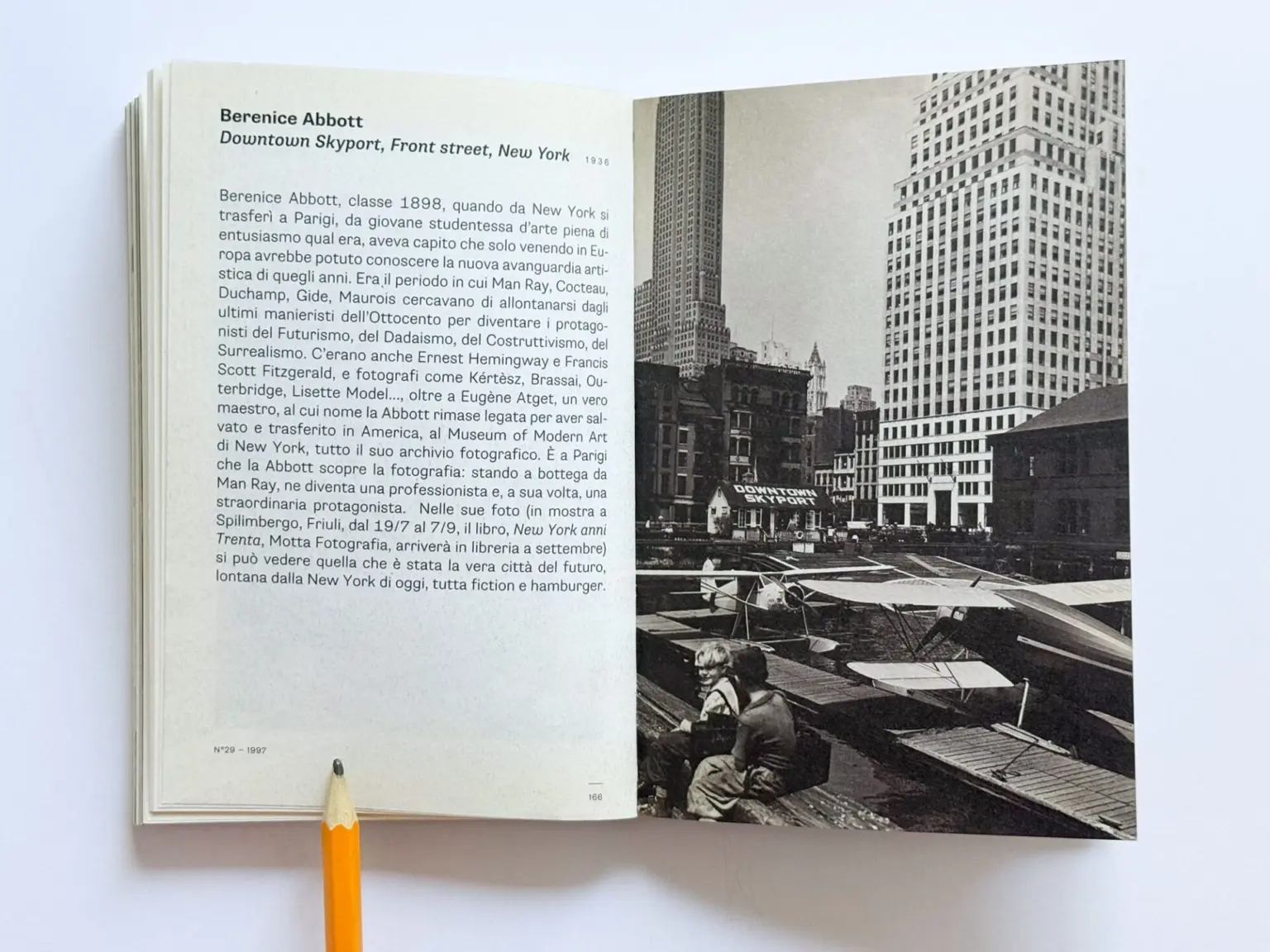
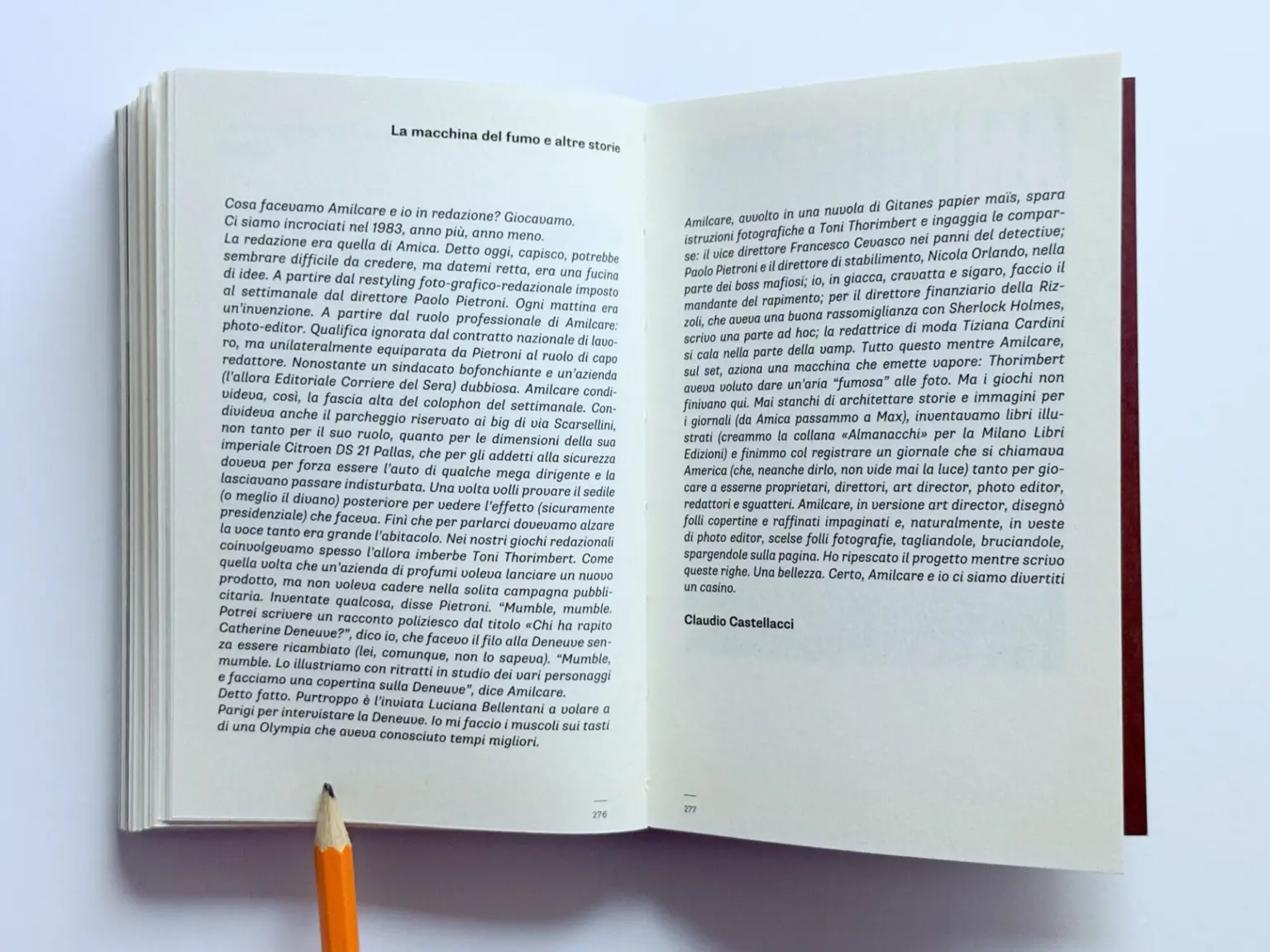
From 1994 to 2001, Amilcare Ponchielli, Italy’s first photo editor at Amica, then at Max and finally at Sette, wrote a short column called Fotofinish in the Corriere della Sera magazine. These were notes prompted by one particular photograph among the countless images that crossed his desk. A recent book presents a selection of these «pills», as they are called in the introduction by Barnaba Ponchielli, Amilcare’s son, who together with his mother Maria Stiffoni was determined to bring this little gem to life. Giovanna Calvenzi, who curated the selection of these short pieces, wrote: «Amilcare Ponchielli was special. He dreamt of photography. He used photography as a pretext to tell the wonderful stories that only he knew how to invent. (…) He was one of the first Italian journalists to take photography seriously: he saw every exhibition, every newspaper, he was a passionate collector of photobooks, he wanted to meet photographers and explore with them the meaning of their work».
It begins with a piece published in issue no. 44 of Sette in 1994. The starting point is an image by Gabriele Basilico – Saint Roch, 1944 – who «made electric wires a constant feature of his photographs»; a photograph from the exhibition “Nizza in controcampo” held in Cuneo. Looking at it, Ponchielli was reminded of the last scene of Jules Dassin’s 1955 film Du rififi chez les hommes, when Jean Servais, «before bleeding to death in his car, looks up and sees the electric cables crossing the sky».
A few issues later – no. 48, again in 1994 – we discover that, at the age of nine, our author had hung in his bedroom in Caracas, where he lived, a photograph taken in London in 1952 by Robert Frank. «Every night, in the darkness of the room, the image and what was inside it came to life. The three ladies in the background would move forward and, when they reached the chair, they would stop and ask me what I was doing there all alone. I would answer that I was there to sell the mirror». Here too it is a way of drawing attention to a photographer and to the exhibition Moving Out at the National Gallery of Art in Washington.
Equally “dreamlike” is the note – no. 2, 1995 – on the photograph of Berlusconi and Mitterrand at the 1994 Essen summit. The photographer Martin Cleaver caught our former Prime Minister «among the powerful of the Earth, laughing, laughing, laughing, and everyone wondered why, given that everything in his country was falling apart. (…) Cavaliere, be kind, make us laugh too before the famous dream fades away».
The first photograph, Nicéphore’s The Set Table of 1822, is the occasion to point out that «Mala tempora currunt for photography. If you remember, in the first column of this series I complained about the absence of the photographer’s name, especially in daily newspapers: the names are still missing, but every now and then others appear, such as Grazia Neri, Luigi Volpe, Agf, Granata Press, Contrasto, Olympia, etc. … which are photo agencies. I was saying these are bad times for photography. Not only does the person who took the picture not exist, but the picture itself is cropped, cut out, overlaid and mixed up with others, so that the original photo is no longer recognisable – almost a massacre. What do the desaparecidos do? And the agencies? Nothing. Let’s save photography! At present there are only two newspapers that respect photography, and they are Il manifesto and l’Unità. Must I then give up?» That was 1995. The following year, in issue no. 9, comes the rebuke to Giorgio Bocca who, on the launch of Lo Specchio, the new supplement of La Stampa, protested in the pages of the monthly Prima Comunicazione against the intrusion of images into news reporting. «Is it possible that after working so long in newspapers – and in newspapers that matter in this country, what’s more – the journalist Giorgio Bocca does not consider images and graphic design part of the content, as indeed they should be, without belittling anyone’s work?»
In 1966 – no. 48 – the starting point for reflection is a portrait of Elizabeth Hurley by Albert Watson. «(…) she is not the boss’s moll but an English girl who grew up in Brixton, a rather disreputable area of London, and was raised in the aristocratic world of fashion, very soon becoming a Lady. (…) She was used by the international press as an object of scandal when her boyfriend Hugh Grant was caught with the prostitute Divine Brown (which gave Lady Diana a long period of truce and rest). Hurley is an example of how image experts can transform you from a punk girl into a Princess. That is what is happening to our (formerly) grey politicians».
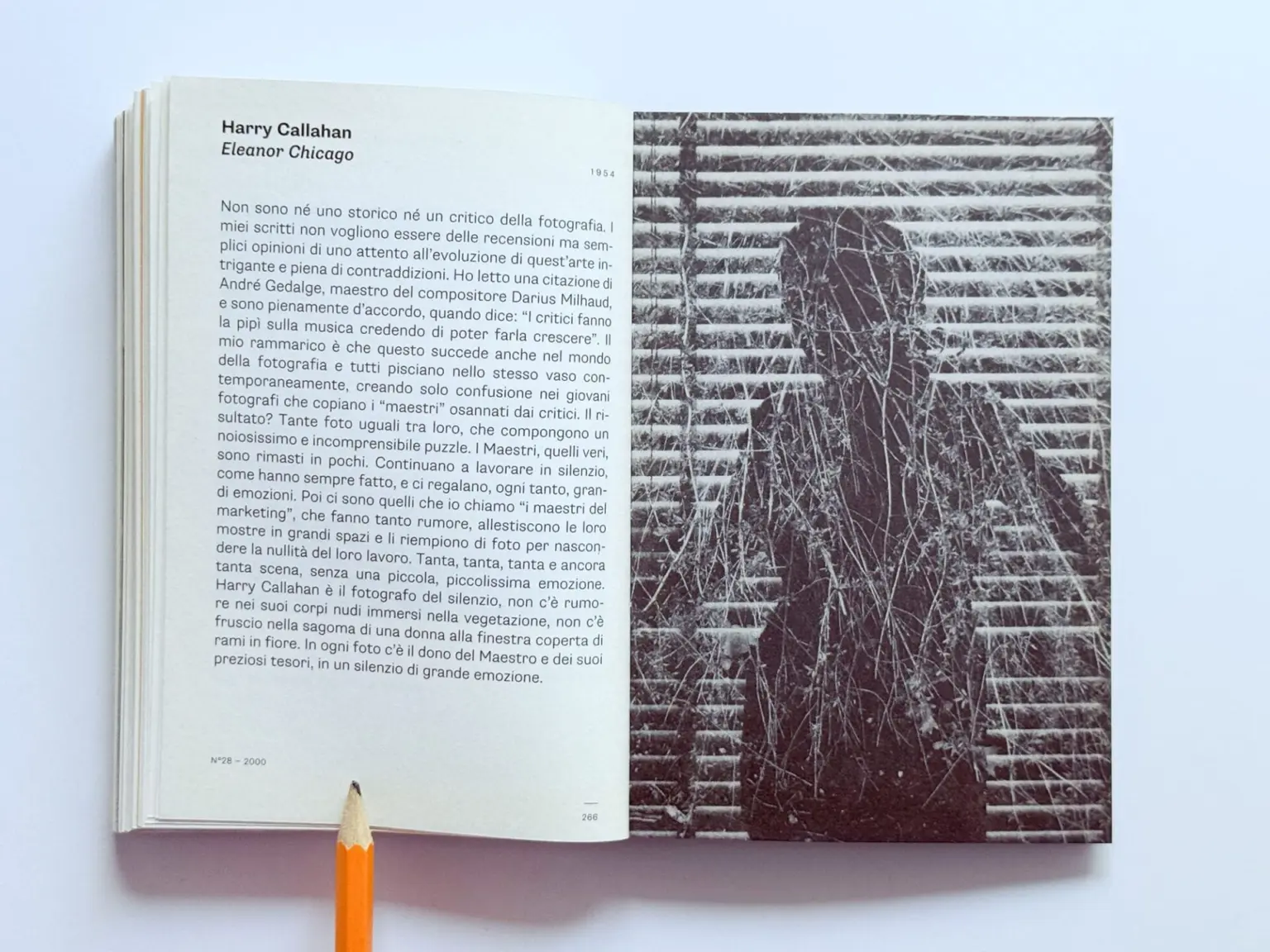
I realise that all of these Fotofinish pieces deserve to be quoted, and in full, but obviously that is not possible. I will quote just one more – Sette no. 28, 2000 – because it is still relevant today and because here Ponchielli speaks in the first person to explain his position to the reader. «I am neither a historian nor a critic of photography. My writings are not meant to be reviews but simply the opinions of someone who closely follows the evolution of this intriguing art, so full of contradictions. I read a quotation by André Gedalge, teacher of the composer Darius Milhaud, and I wholeheartedly agree when he says: “Critics pee on music thinking they can make it grow”. My regret is that this also happens in the world of photography, and everyone pisses into the same pot at the same time, creating nothing but confusion among young photographers who copy the “masters” praised by the critics. The result? Lots of photos that all look alike, forming a terribly boring and incomprehensible puzzle. (…)»
This elegant, spare little book, designed by Michele Marchetti, 10 x 15 cm in format, with an exposed spine showing the various signatures in different colours, classically sewn together with white thread, was printed in December 2014 but is unfortunately not for sale. At least for now…
Carlo Cerchioli (Fotografia&informazione, 2015)
— Amilcare had my book on Palermo in his library in Milan… and he was also the author of the article published in Sette in 2001.
I, however, had never known that review existed.
In 2014, at a conference, I met Maria Stiffoni, who told me she would send me something. Well, fourteen years later I discovered everything: that article had been the last one Amilcare signed in his extraordinary career as Italy’s first photo editor.
I deeply regret not having been able to thank him. I am moved by the book, but also saddened by his passing.
The book reached me at Christmas 2014, thirteen years after the article appeared in the Corriere della Sera.
My heartfelt thanks to Mariuccia, Barnaba and Giovanna
Sandro —