Palazzo Ziino, City of Palermo, Department of Culture, curated by Davide Lacagnina, 2008
City at the end of the empire — Davide Lacagnina
The body of the city is that of an atrophied giant, sunk into its bed and hampered in its movements. At most it can be found on the surgeon’s table, for more or less complex operations, and necessarily under local anaesthetic. Because no narcosis could encompass such vast pain. At an almost daily pace, in fact, mutilations, sutures and prosthetic grafts are inflicted on a numbed patient who is nonetheless a lucid witness to a haemorrhage that seems unstoppable. Urban joints that have grown out of all proportion no longer respond to any plan, upstream of a situation that has by now slipped out of the hands of architects, planners, sociologists and administrators, who are very often unable to talk to one another and, above all, to bring their intentions into dialogue with the city – that is, to listen to what every metropolitan universe has to say.
Perhaps this is also why architecture tried early on to pick up the threads of that dialogue with art which certain twentieth-century poetics had abandoned, traumatically breaking the continuity, historically rooted in Western culture, between the design of the city and the forms of its representation. This is, after all, the critical perspective boldly undertaken by the 10th Architecture Biennale directed by Richard Burdett, in which the broad participation of artists, alongside urban planners and architects, was motivated by the need for a reading of the megacities of the third millennium finally ‘broadened’ to include the sensibility and creativity of observers keen to detect the flaws and contradictions not only of contemporary architecture but, more generally, of the degenerative process through which cities soon became no man’s land.
It was not, and is not, clearly the fault of architecture alone if cities today are what they are: it is first and foremost a matter of political responsibility. If cities mirror the social, economic and cultural changes that cut across their history and geography, then it becomes above all the responsibility of a conscious cultural policy to take charge of the possible balance between these different demands, in which quality of life cannot be sacrificed on the altar of profit and speculation. The disaster of endless suburbs, the unstoppable decay of historic centres and the lack of connection between the most diverse layers of urbanisation are only the most conspicuous aspects of the failure of the ‘crossability’ of contemporary cities, against which the allure of a liquid, ubiquitous and omnivorous modernity meets resistance – a modernity which, within the space of a few years, has not by chance turned into ‘fear’: the expression of a growing unease towards changes of which we have lost awareness and in the face of which every capacity for interpretation has been too hastily delegated to the oligarchies of economic and political power.
Nocturnes
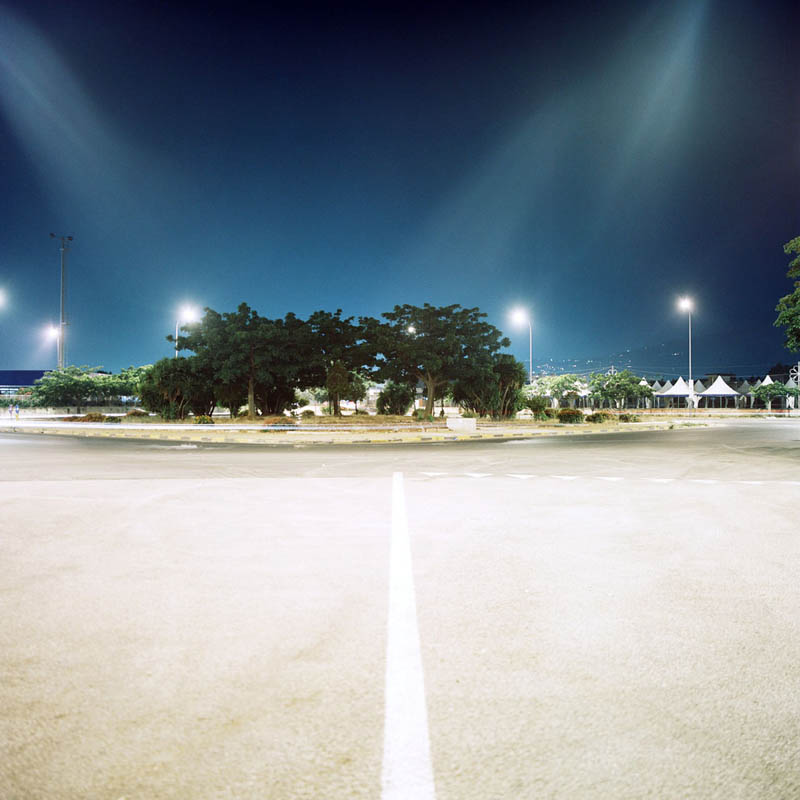
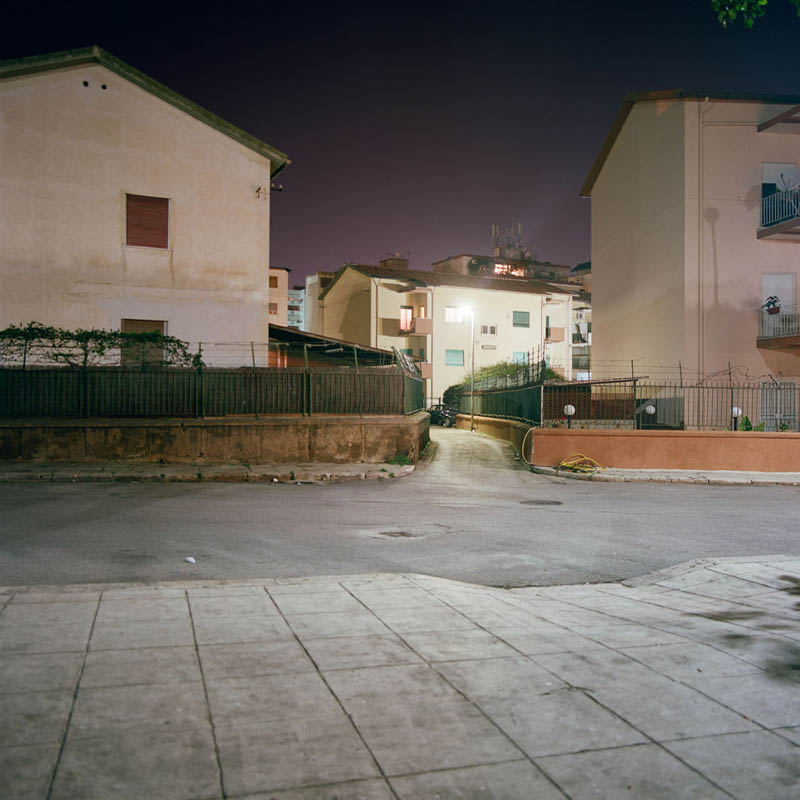
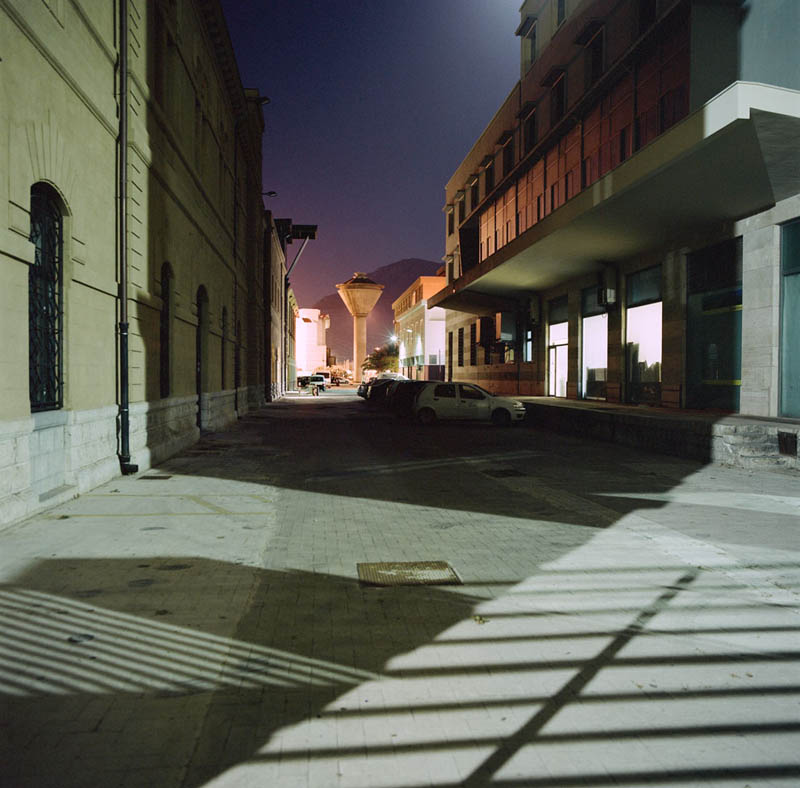
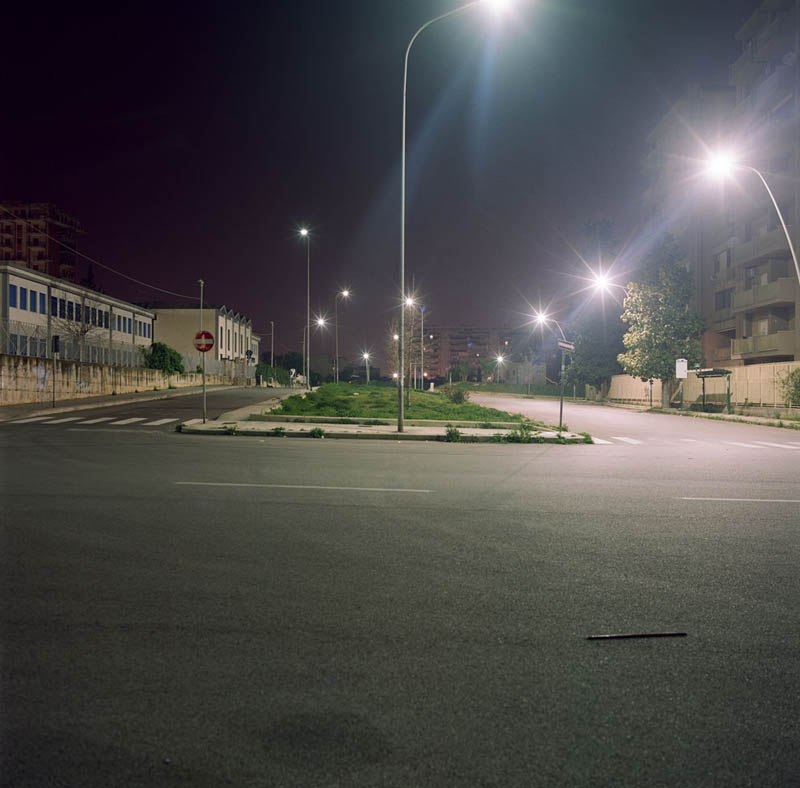
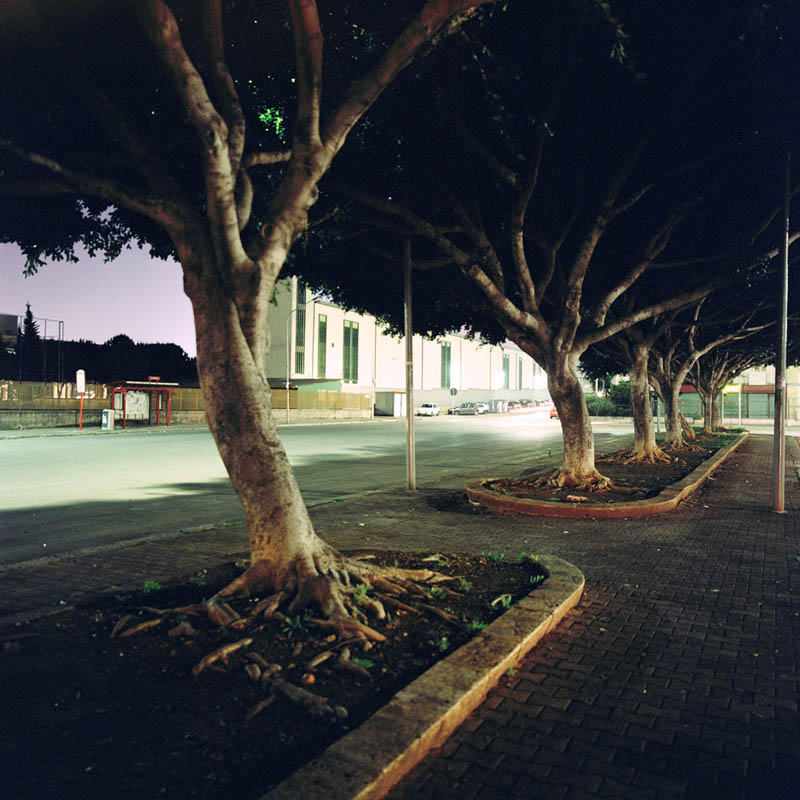
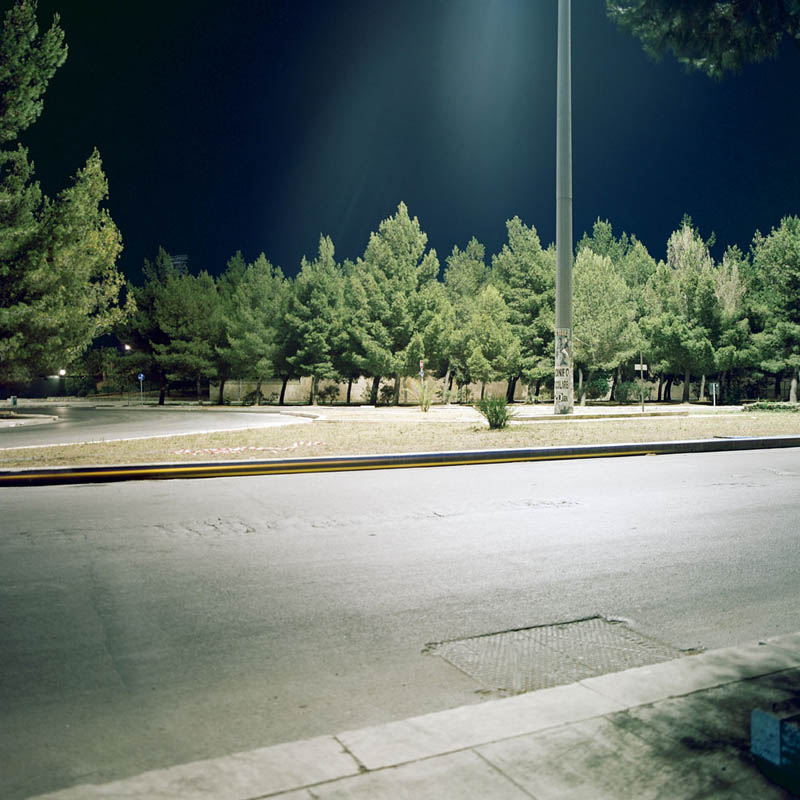
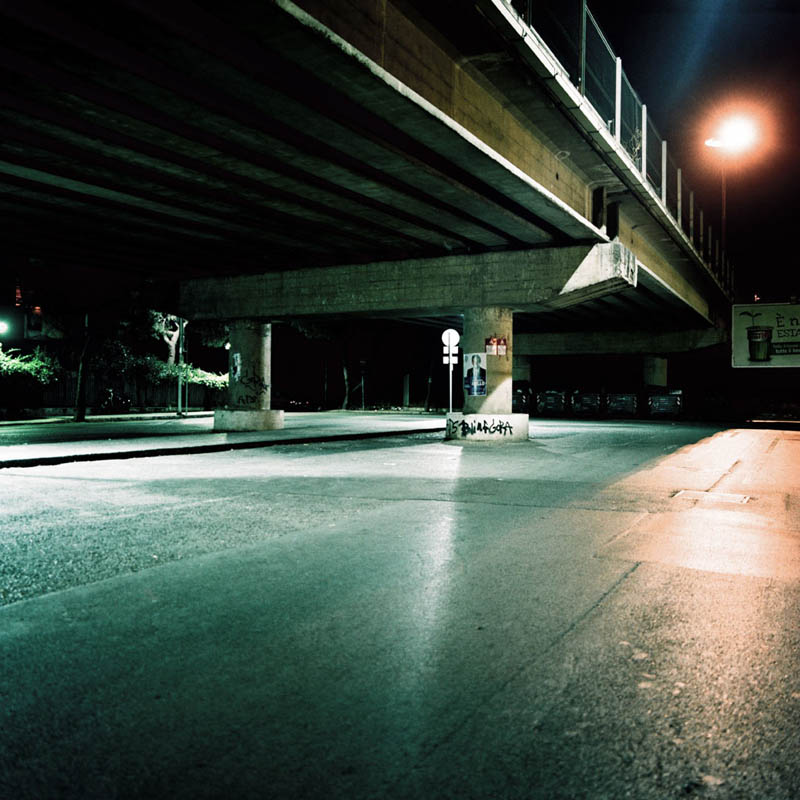
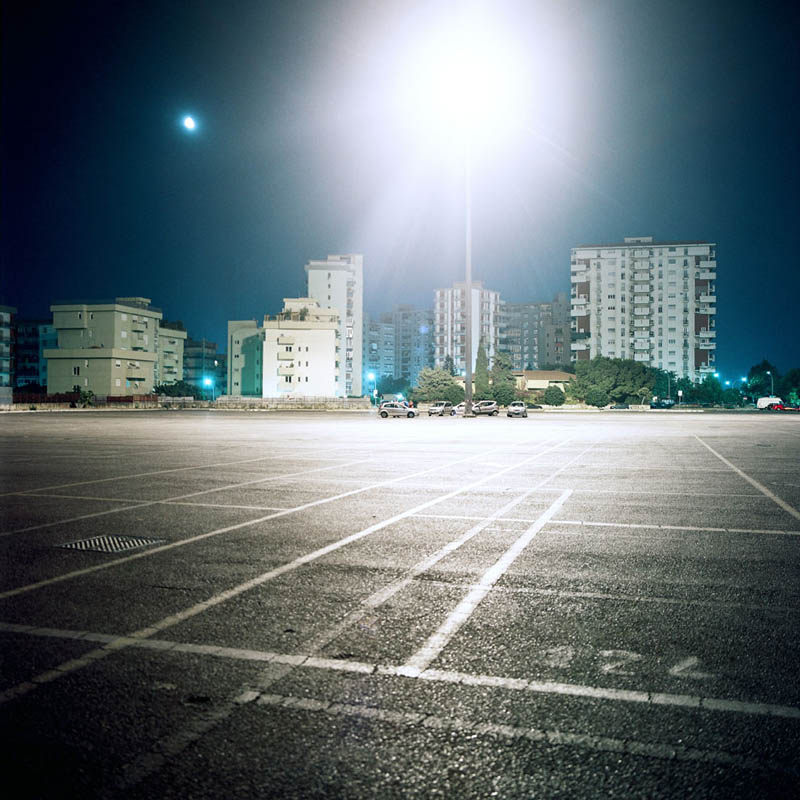
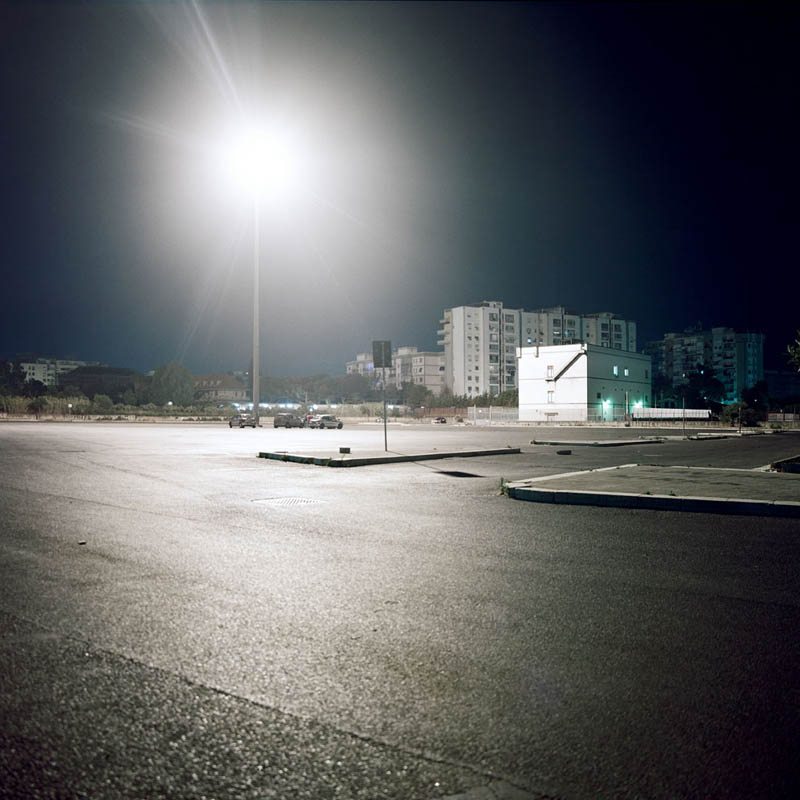
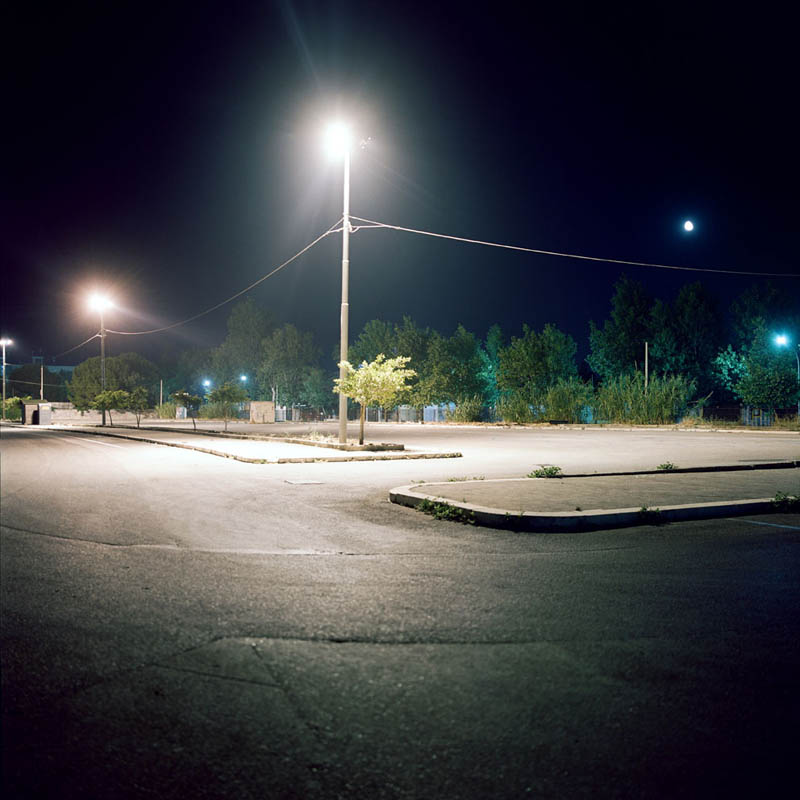
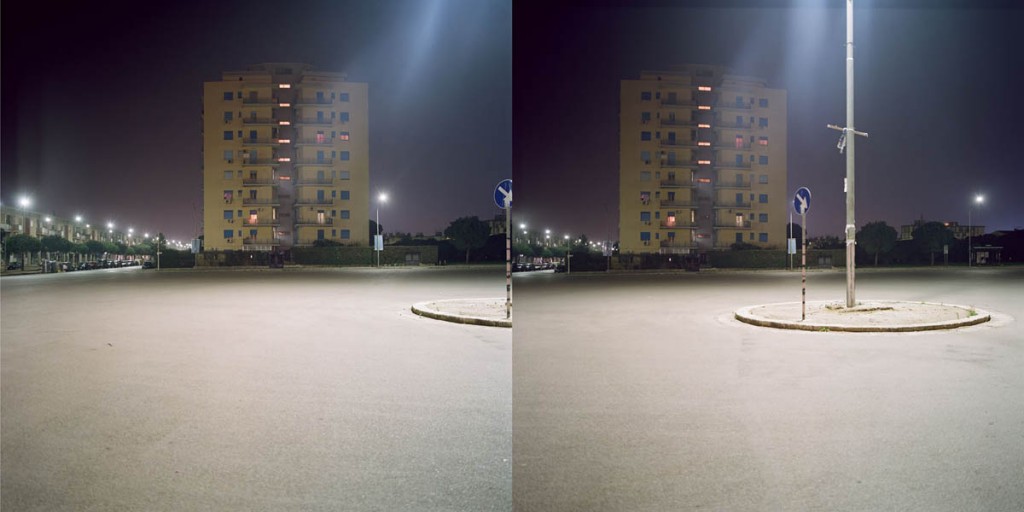
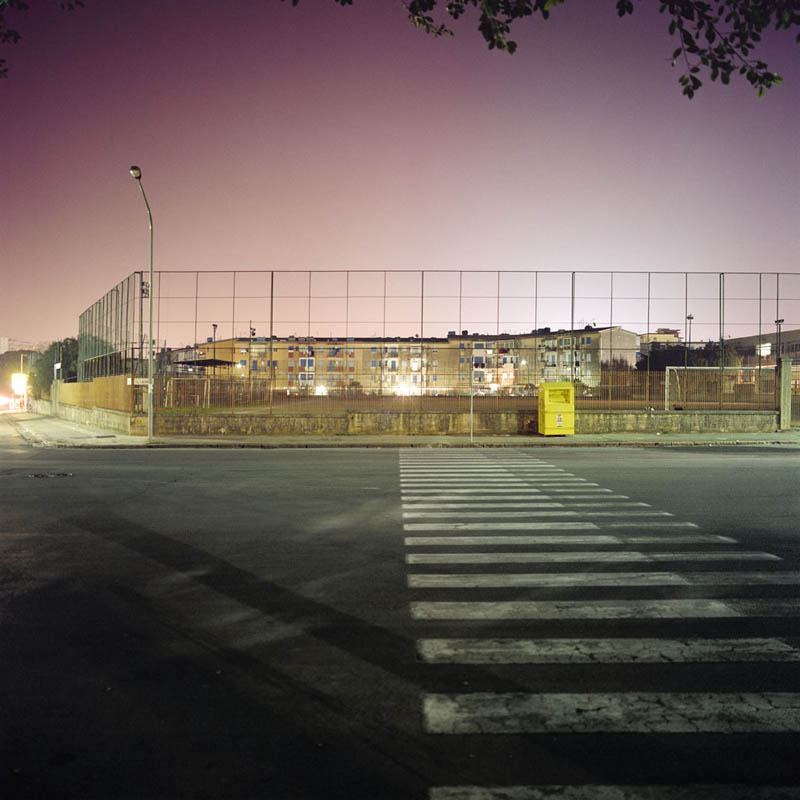
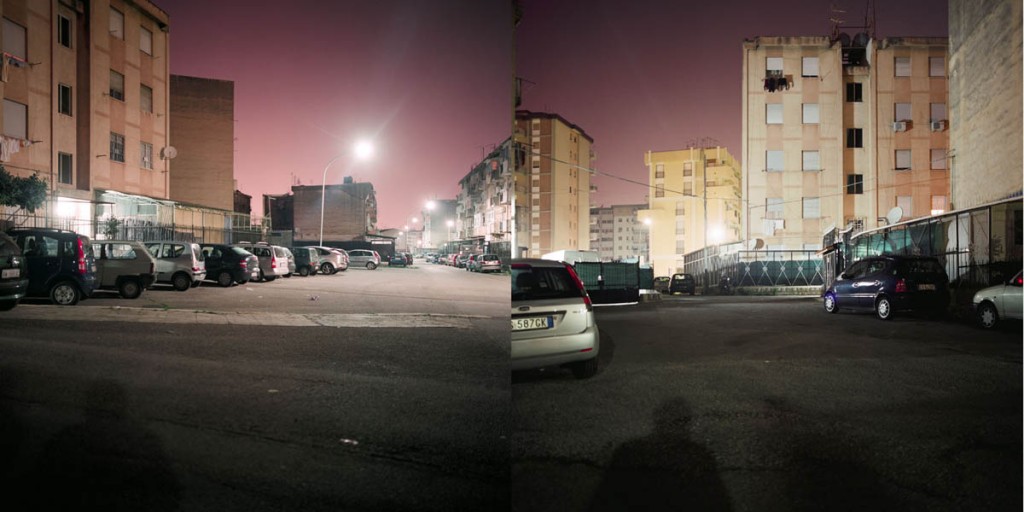
The series of Nocturnes produced from 2007 onwards is the most intense core of Scalia’s research in recent years, because it represents both its most authentic and its most angular face. There is a strand of international photography that throughout its history has engaged with the theme of the metropolitan exterior at night – from Atget’s Paris at the beginning of the century to the influence of his lesson on the Surrealists and on the filmmakers of the Nouvelle vague, by way of Robert Frank, down to the more recent work of Barbieri, Basilico and Belinchón (to stop at the letter B…) – to which Scalia also belongs with this personal and distinctive new contribution, in which the city brazenly displays its least known face, the one pushed to the margins of all consideration, free from the trappings of institutions and from the need to project a very precise image to the outside world. It is the city of dormitory neighbourhoods, of suburbs without quality and without services, in which the soul of places nonetheless catches its breath and manages to breathe, finally emptied of the anxieties and ‘assaults’ of daily life. And even amid the decay, in the interstices of an architecture that has spectacularly failed in its mission, producing anonymous and dehumanising containers, Scalia has managed to bring into focus all the desperate beauty of concrete and asphalt, pursuing with his camera impeccable geometries, stereometric scores in which every tension finds its resolution, aided once again by a ‘choked’ light that suspends judgement and hints at unexpressed possibilities.
Sequences of streets, trees, road signs, lit balconies, rows of parked cars, piled-up rubbish and cold architectural profiles draw a map of the city that is above all mental, the expression of a state of mind of dejection and desolation, in which every urban utopia falls away and every good intention of redemption awaits verification and a full assumption of responsibility. The extreme refinement of the framing, the mature direction of every shot and the taut yet never overbearing control of form never serve mystifying or aestheticising ambitions. No compromise is possible, after all. The frankness of the shot allows no exceptions and nails us to an exclusive, all-encompassing involvement, which does not exempt even the most protracted contemplative lingering from adopting a ‘militant’ point of view, standing unreservedly alongside the photographer’s.